Northern Pest’s Total Termite Protection Plan is the most innovative and complete termite treatment in India for your home or business. Our termite control program focuses both on the soil and the structure. Northern Pest Control technicians protect your entire property by combining our termite service above and below ground into a single, comprehensive treatment. Example termite treatment areas include:

Learn more about how you and Northern Pest Control can keep your property free of these “silent destroyers.”
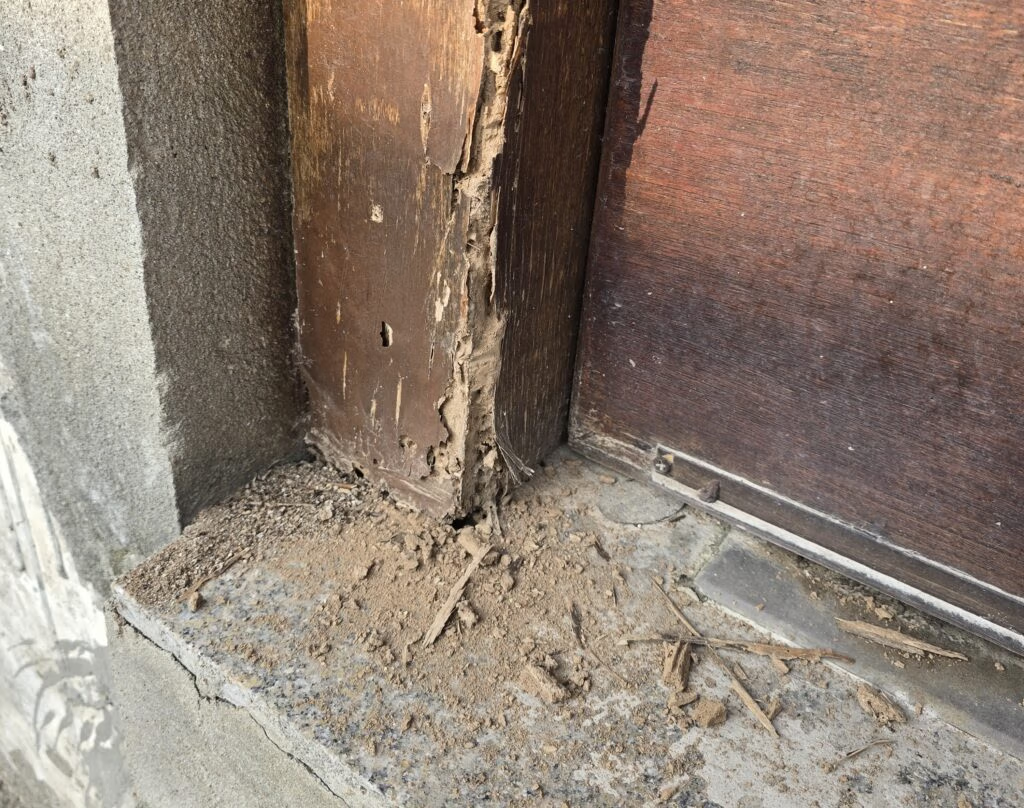
Common signs of Termite Infestation
Think you may have a termite problem on your boat? Truly Nolen’s Total Termite Protection Plan is equally as effective on marine vessels. Call for a free inspection today.
Termites are social insects that live in colonies, much like ants. They are often mistaken for ants, but they belong to a different order (Isoptera). These fascinating yet destructive pests primarily feed on cellulose, an organic fiber found in wood and plant matter. This makes the wooden components of your home – such as framing, flooring, and furniture – their primary food source.
There are several types of termites found in India, the most common being subterranean termites. These termites live in underground colonies and build intricate tunnel systems to reach food sources above ground. They require moisture to survive, which is why they often thrive in damp or humid environments.
Termites work silently and methodically, often consuming wood from the inside out, leaving the outer surface intact. This makes infestations difficult to detect in their early stages, allowing significant damage to occur before their presence becomes apparent. Their ability to remain hidden while causing extensive destruction is why they are often referred to as “silent destroyers.” Understanding their biology and behavior is the first step in effectively combating them.
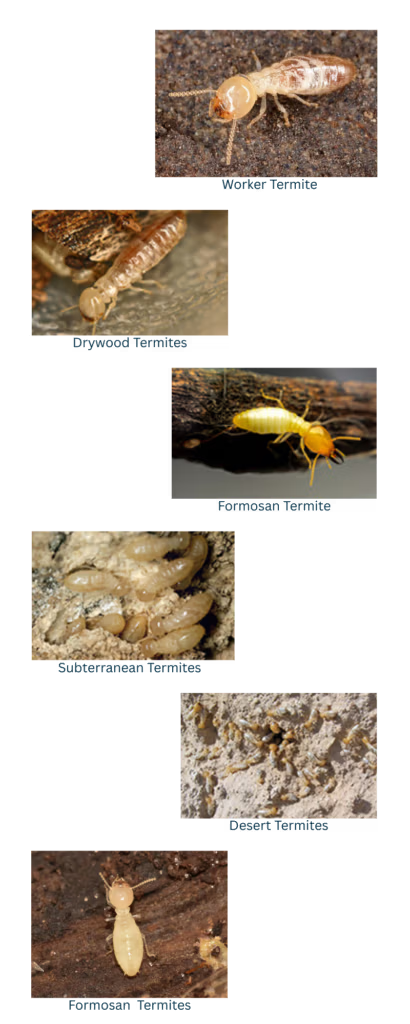
There are more than 40 types of termites, and Northern Pest Control technicians are experts at treating all of them. Learn about the most common termite species found in North India.
At the heart of every termite colony live the king and queen, the royal couple who started it all. After their first flight, they find a suitable nesting site and start a new family. The queen’s main function is to lay eggs, sometimes thousands a day, which is why her body grows so large. The king remains by her side throughout her life, helping her fertilize the eggs. Together, they are the parents of the entire colony, and their teamwork ensures the survival and growth of their vast underground kingdom.
Behold the diligent force that keeps a termite colony thriving: worker termites. These tireless creatures are the backbone of their community, responsible for nearly all essential tasks. You’ll find them constantly on the move, searching for food sources like wood, which contains the cellulose that makes up their diet. But their work doesn’t end there. Worker termites are also the master architects and construction crew, meticulously building and maintaining the intricate network of tunnels and chambers that make up their nest. They are also the dedicated caretakers, caring for the queen, her eggs, and young nymphs, ensuring the future of the entire colony. Ultimately, without the tireless efforts of worker termites, the colony simply couldn’t survive.
Termite soldiers serve as the defenders of the colony, characterized by their large, armored heads and powerful mandibles. These physical features are specifically adapted for combat, primarily against their main predators, such as ants. Unlike smaller worker termites, soldier termites cannot feed themselves and instead rely on the workers for nourishment. Its main function is to defend the nest and protect the colony from potential dangers. Upon detecting a problem, it quickly moves to the affected area and uses its powerful mandibles to drive away intruders. It also uses its large heads to block nest openings, which helps maintain the safety and structural integrity of the colony.
Alates are the winged reproductives that swarm out from the nest and establish new colonies. Male and females pair off and look for a suitable environment to mate. They are often confused with ant swarmers.
Expert professionals with technical experts having education in Pest Control Services
We use only Govt. approved chemicals (CIB) and adhere to industry standards for safe and efective Pest Control
Our technicians conduct thorough inspections using advanced technology to accurately assess Pest infestations.
Every treatment plan is tailored to your property for Pests having minimal environmental impact.
Highly trained technicians backed by service warranties for long-term Pest Protection and peace of mind.
We provide residential pest control, commercial pest control, and Integrated Pest Management (IPM) solutions for a wide range of pests including termites, cockroaches, bed bugs, mosquitoes, flies, rodents, and more.
We provide residential pest control, commercial pest control, and Integrated Pest Management (IPM) solutions for a wide range of pests including termites, cockroaches, bed bugs, mosquitoes, flies, rodents, and more.
The best pest control service in Punjab & Chandigarh should offer comprehensive solutions with eco-friendly methods, having highly trained technicians, and service guarantees. NORTHERN Pest Control Service is consistently rated among the top providers in Punjab Chandigarh because we offer Customized treatment plans, government-approved, eco-friendly chemicals safe for families and pets, certified local technicians experienced in local pests and challenges, a service warranty with free follow-up treatments if needed, and transparent pricing. When choosing, look for companies that understand the region’s climate and pest behavior, especially during monsoon season.
Yes, our treatments comply with international safety standards and are safe for homes with children, pets, and sensitive individuals. Learn more about our Safety, Health, and Environment (SHE) initiatives here.
Northern Pest Control helps prevent pests by offering tailored pest management solutions that complement the residence or office’s unique situation.
For Chandigarh, Punjab, Haryana, Himachal, we recommend Quarterly general pest control (every 3 months) for year-round maintenance. Annual termite inspection and treatment, with extra checks before/after monsoon. Monthly mosquito control during peak season (July-October). Bi-monthly rodent checks in winter (November-February). Pre-monsoon treatments (May-June) are crucial due to North India’s climate fostering pests. Homes near green areas may need more frequent service.
The most effective termite treatment in North India depends on property type and infestation stage. We recommend Chemical Soil Treatment (creates a barrier, good for new constructions in local clay soil), Wood Treatment (direct application, vital for older buildings), Baiting Systems (eco-friendly, eliminates colonies), and Microwave/Heat Treatment (non-chemical, for specific areas). NORTHERN Pest Control often uses a combination approach (soil treatment, wood treatment, monitoring) for comprehensive protection against Punjab, Haryana, Chandigarh’s aggressive subterranean termites.
To find reliable services near you check local credentials (Commercial Pest Control License). Read authentic reviews (Google reviews from service areas). Verify experience (15+ years in Punjab, Chandigarh). Ask about chemicals (Central Insecticides Board approved). Get detailed quotes (free inspection, transparent pricing). Check service guarantees (warranties, follow-ups). Confirm response time (important for dense areas). Northern Pest Control serves all Punjab, Chandigarh areas with quick response times from local service centers.
Common pests in North India include Cockroaches (American: reddish-brown, 3-4cm; German: light brown, 1.5cm; look for droppings, musty odor). Termites (subterranean build mud tubes; look for wood damage, discarded wings post-monsoon). Mosquitoes (Culex, Anopheles near water; Aedes with white stripes carry dengue). Rodents (mice, rats; look for droppings, gnaw marks). Bed Bugs (rust-colored spots on bedding, itchy bites). Pest activity varies seasonally: cockroaches/mosquitoes surge in monsoon, rodents increase in winter.
Yes, recurring services are highly recommended for North India due to extreme climate variations, monsoon impact (ideal breeding conditions), high population density (easy pest migration), and proximity to green spaces. For comprehensive protection, we suggest: Quarterly general pest control, Annual termite inspection/treatment, and Monthly mosquito control during peak season (July-Oct). NORTHERN Pest Control Service offers Annual Maintenance Contracts (AMCs) tailored for Punjab, Haryana, Chandigaarh including scheduled treatments and emergency response.
Optimal seasons for termite treatment in Punjab, Chandigarh & Haryana are Pre-monsoon (April-June) for preventative treatment as dry soil allows deeper penetration, and Winter (November-February) for comprehensive treatment as termites move deeper indoors. Avoid peak monsoon (July-August) due to rain washing away treatment and extreme summer (May-June >45°C) which can affect chemical efficacy. We recommend a two-phase approach: pre-monsoon barrier and winter structural treatment for best results in North India’s climate.